Guide · 6 min · 2 Oct 2026
How to Attend a Classical Dance Festival for the First Time
A first-timer's guide to enjoying classical dance at Konark, from programme notes and seating to concert etiquette.
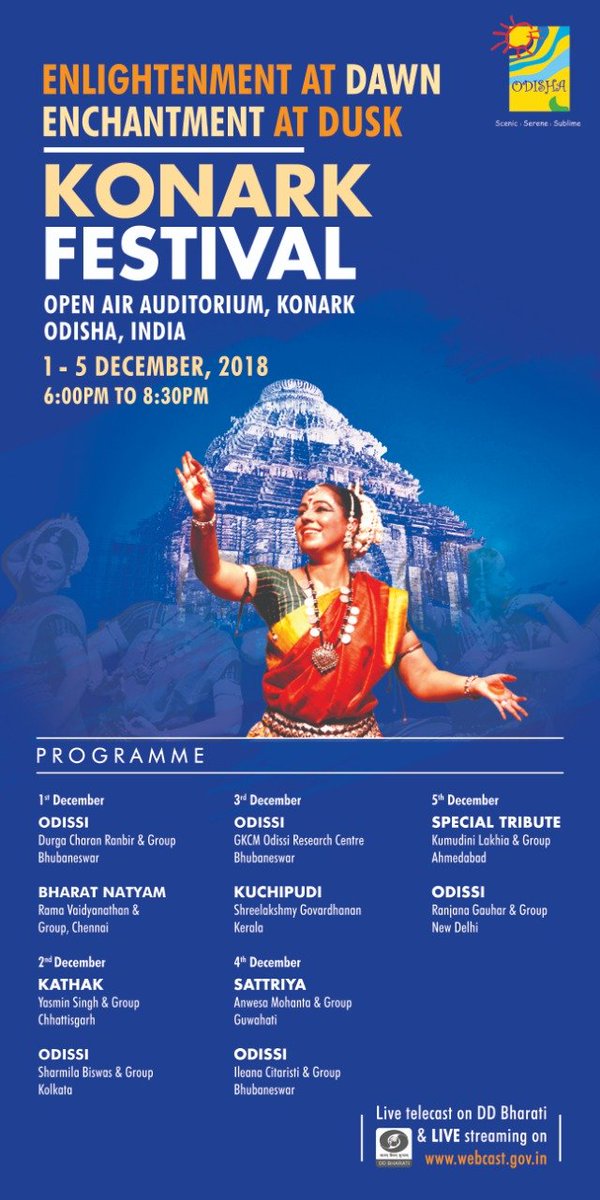
Watching classical dance for the first time can feel unfamiliar, especially when a programme moves between several Indian dance traditions. At Konark, the performances take place in an open-air setting overlooking the Sun Temple, bringing dance, music and architecture together in one evening.
You do not need specialist knowledge to enjoy the festival. A little preparation, quiet attention and curiosity will help you follow what is happening without feeling that you need to understand every movement.
Before the performance
Check the programme before you arrive. The Konark Dance Festival has presented forms including Odissi, Bharatanatyam, Kathak, Kuchipudi, Manipuri, Kathakali and Sattriya, so an evening can contain very different movement vocabularies and musical traditions.
Programme notes can be useful even if you have never studied dance. Look for the name of the dance form, the choreographer or guru, the musicians and the title of each item. Some notes explain the story, devotional theme, literary source or musical structure behind a piece.
Arrive early enough to find your seat without crossing in front of an audience once the performance has begun. The open-air setting can also mean cooler evening conditions, so bring a light layer while keeping your clothing comfortable and respectful.
What to watch for
Classical Indian dance is not one single style. Each tradition has its own movement vocabulary, music, costume and relationship between rhythm, gesture and expression. Odisha Tourism describes Odissi, for example, through movements of the head, torso and body alongside expressive gestures and stillness.
- Watch the hands and face. Gestures and facial expressions can communicate characters, emotions, objects or parts of a story.
- Listen to the rhythm. Percussion and vocal music often interact closely with the dancer's footwork and movement patterns.
- Notice repetition. A movement sequence may return in a different musical or expressive context.
- Read the programme. A short explanation can make a mythological, literary or devotional piece easier to follow.
It is fine not to identify every technique. Concentrating on the relationship between movement, music and expression is enough for a first visit.
Performance etiquette
- Keep phones silent. Avoid calls, bright screens and other distractions once the performance begins.
- Stay seated when possible. If you need to leave, wait for a suitable pause and move out without blocking other viewers.
- Do not talk through a piece. Quiet conversation can make it difficult for nearby audience members to hear the music and follow the performance.
- Follow photography rules. Some performances may restrict photography or recording. If cameras are permitted, avoid flash and do not hold a phone above other people's heads.
- Applaud naturally. Applause is appropriate after a performance or significant conclusion. You do not need to know every convention before joining the audience.
Respect the setting and performers
The festival's setting is part of the experience, but the Sun Temple should not become a distraction from the performance. Follow instructions around heritage areas and do not climb on, touch or lean against protected structures for a photograph.
When photographing performers or other audience members, follow the event's rules and avoid intrusive close-ups. If you meet dancers after a performance, give them space and ask before taking a portrait.
Most importantly, let the evening unfold at its own pace. A classical dance festival is not a test of how much you already know. Read a little, watch carefully, listen to the music and allow each dance tradition to make its own impression.
More guides
Keep reading
How to Enjoy Holi Respectfully
Colour, consent, and safety for Holi’s play day — practical advice for first-time participants.

A Visitor's Guide to Diwali
Lamps, family gatherings, and regional traditions — how to share Diwali without turning it into noise.

How to Experience Navratri Respectfully
Garba, fasting, and regional traditions — practical etiquette for nine nights of Navratri.