
Xaak Aru Bhaji
A simple preparation of leafy greens and vegetables that reflects the everyday, seasonal character of Assamese cooking.
Seasonal & agrarian
Also known as Kongali Bihu
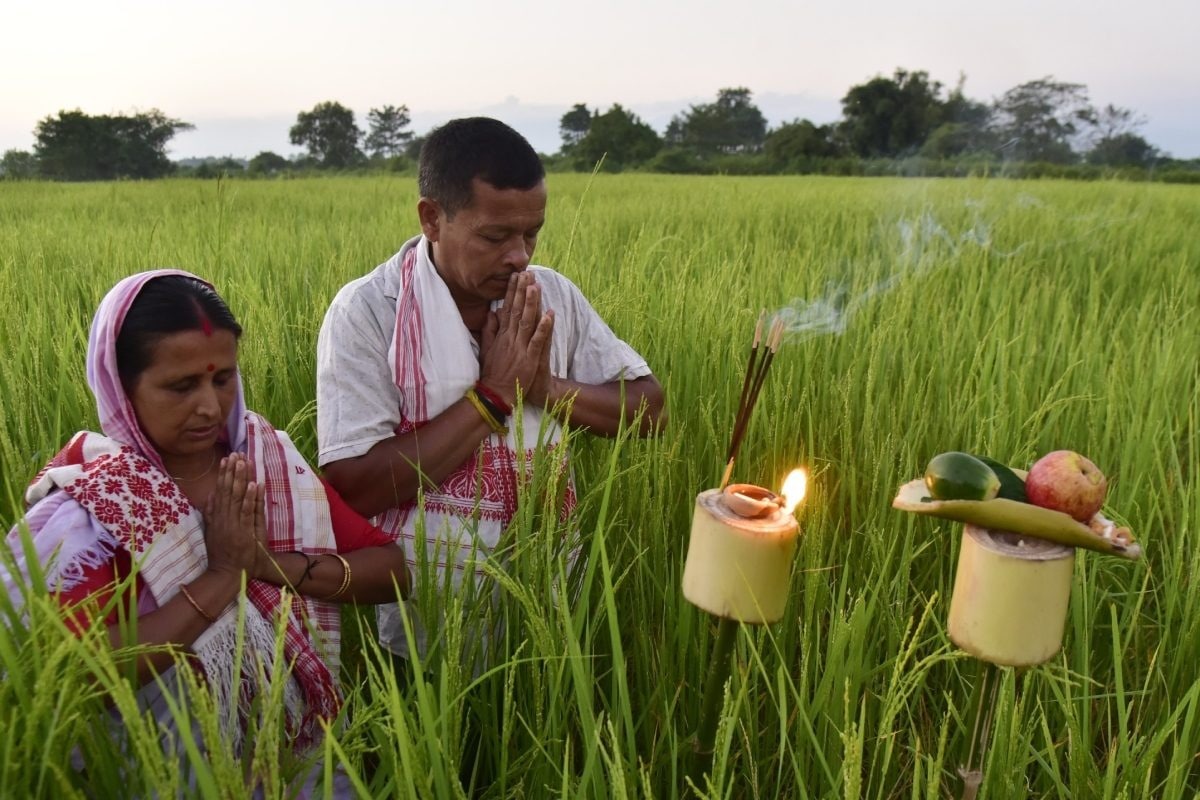
A quiet Assamese festival of lamps, prayers and hopes for a healthy rice harvest.
Kati Bihu is one of the three major Bihu festivals of Assam and is closely connected with the agricultural cycle. It falls at the beginning of the Assamese month of Kati, when rice cultivation is underway and household grain stores are traditionally less plentiful.
Unlike the more festive Bohag and Magh Bihus, Kati Bihu is marked by a quieter atmosphere, with lamps, prayers and simple household observances focused on the wellbeing of crops and families.
Hope for the harvest — The festival expresses prayers and hopes for healthy rice plants, protection from pests and a successful harvest.
Household wellbeing — Lamps and offerings around the tulsi plant are associated with prayers for prosperity, health and wellbeing within the family.
Agricultural awareness — Kati Bihu reflects the uncertainty of the pre-harvest season, when farmers depend on the health of standing crops for future food supplies.
Kati Bihu developed as part of the agricultural calendar of Assam and belongs to the longstanding cycle of three Bihus: Bohag Bihu, Kati Bihu and Magh Bihu. Each is associated with a different stage of cultivation and harvest.
Its character has remained comparatively restrained because Kati falls during a lean period in the farming cycle. Household lamp lighting, prayers and field rituals continue to connect the festival with Assam's rice-growing traditions.


