
Gujiya
A crescent-shaped sweet pastry commonly filled with khoya, sugar, nuts, and spices and especially associated with Holi in North India.
Religious & cultural
Also known as Holi
A spring festival of colours, renewal, community, and joyful gatherings.
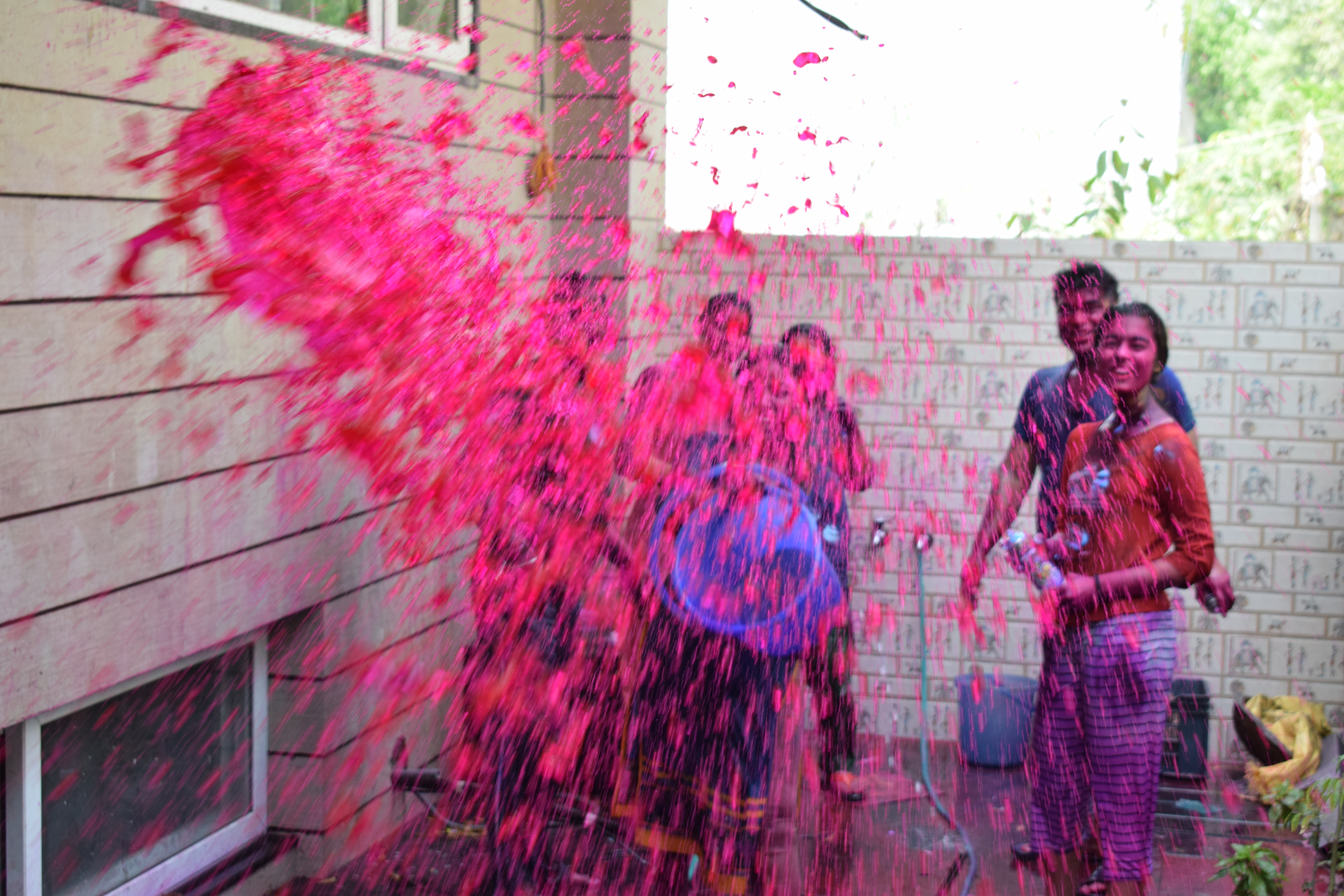
Holi is a major Hindu festival associated with spring and the arrival of the new season. It is widely known for the use of coloured powders and water, alongside gatherings with family, friends, neighbours, and community groups.
The festival combines religious observances with social customs and public celebration. Its forms vary considerably across India and among communities in Nepal and the wider diaspora.
Holika and Prahlada — One widely known tradition tells of Prahlada, a devotee of Vishnu, surviving an attempt by Holika to destroy him in a fire. Holika Dahan recalls this story and is associated with the triumph of devotion and righteousness.
Radha and Krishna — In many North Indian traditions, Holi is connected with the playful relationship of Radha and Krishna. The use of colour is associated with their stories and with themes of affection, play, and devotion.
Spring and renewal — Holi also marks the seasonal transition toward spring and is commonly associated with renewal, social connection, reconciliation, and leaving old grievances behind.
Holi developed from older seasonal and religious traditions on the Indian subcontinent. References to festivals involving colour, springtime celebration, and related rituals appear in historical Indian literature and cultural traditions.
Over the centuries, regional customs shaped the festival in different ways. Religious stories, local traditions, devotional practices, music, food, and public colour play now form distinct expressions of Holi across South Asia and diaspora communities.


