Til Pitha
A thin rice-flour roll filled with roasted sesame and jaggery, representing the traditional pitha-making culture of Assam.

Seasonal & cultural
Also known as Rongali Bihu
Assam’s spring New Year festival of music, dance, renewal and agricultural beginnings.
Bohag Bihu, also known as Rongali Bihu, is the spring festival that marks the Assamese New Year and the opening of a new agricultural cycle. It is one of the three major Bihu festivals of Assam, alongside Kati Bihu and Magh Bihu.
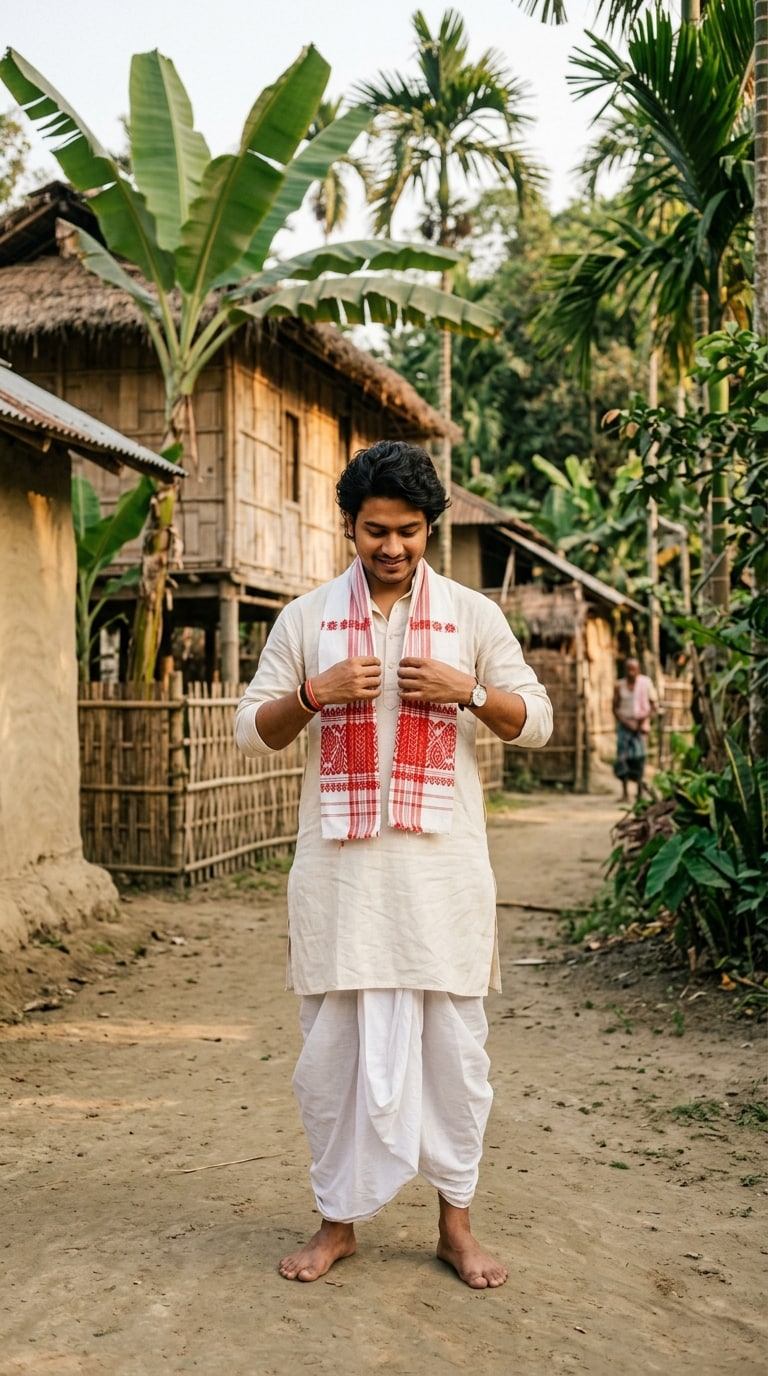
The celebration combines household customs, respect for elders, care for cattle, traditional food, music, dance and community gatherings. Its festive atmosphere is especially associated with Bihu songs, dancing and the exchange of handwoven textiles.
New year and renewal — Bohag Bihu welcomes the Assamese New Year and represents a fresh beginning with the arrival of spring.
Agricultural cycle — The festival is linked with the beginning of the farming season, especially preparations for the cultivation of rice.
Community and relationships — Visiting relatives, honouring elders, exchanging gifts and sharing food strengthen family and neighbourhood ties.
Human and natural vitality — Bihu songs and dances celebrate youth, affection, seasonal change and the renewed energy of the landscape.
Bihu developed from agricultural and seasonal traditions of Assam and incorporates customs associated with several communities of the region. Its practices have changed over time while retaining strong connections to cultivation, cattle, household life, music and communal celebration.
During the Ahom period, Bihu dance was also associated with courtly settings, and the tradition later continued strongly in village courtyards, open spaces and community gatherings. In modern times, public stages, cultural organisations and diaspora associations have expanded the ways in which Bohag Bihu is performed and shared.