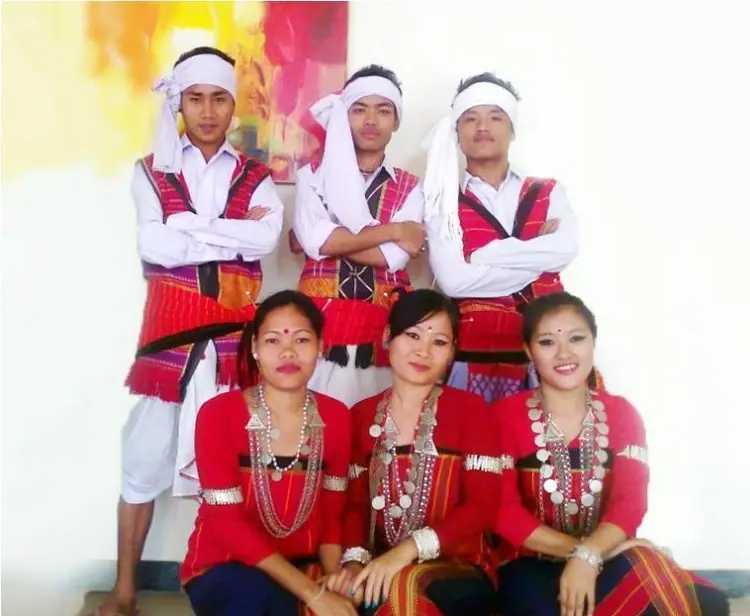
Pajon
A mixed vegetable curry traditionally prepared with a wide variety of seasonal and hill-grown vegetables, often with dried fish.
Cultural & seasonal
Also known as বিজু (Bizu)
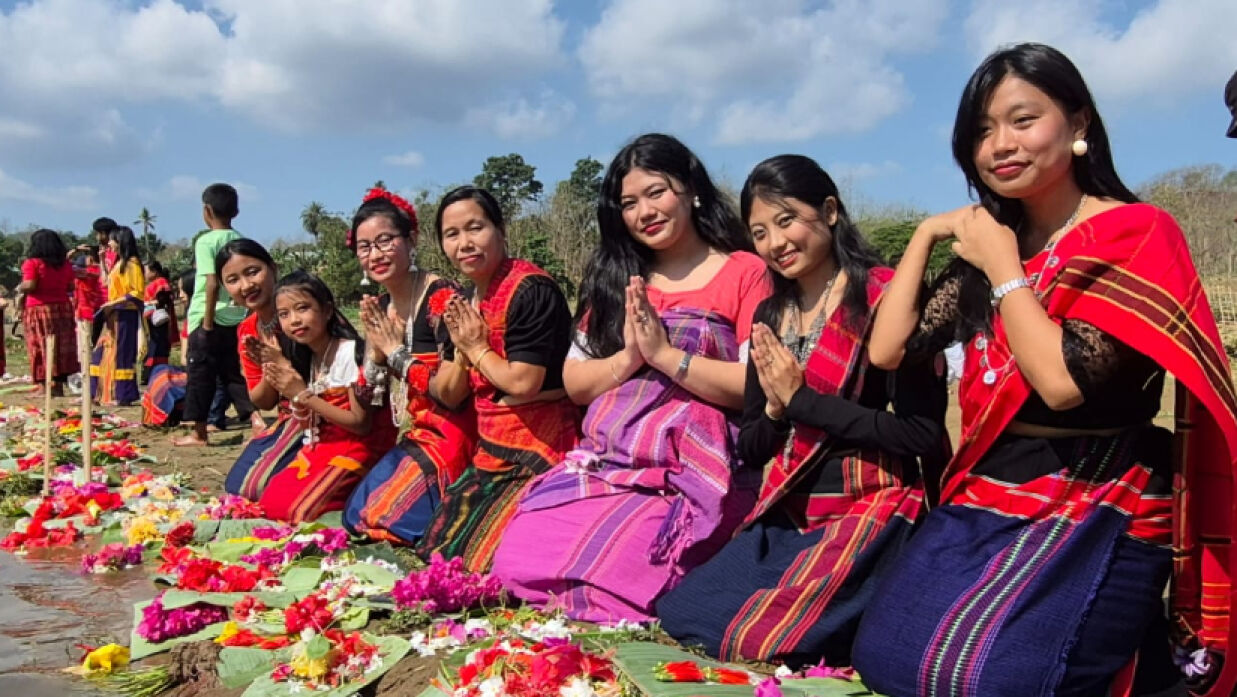
A three-day Chakma New Year festival of flowers, hospitality, traditional food, dance and renewal.
Bizhu is the principal New Year festival of the Chakma people. It is a three-day celebration held in mid-April around the close of the Bengali calendar and the beginning of the new year.
The festival brings together household preparation, floral rituals, Buddhist observances, visits between families, communal meals, traditional games, music and dance.
New beginnings — Bizhu marks the transition from the old year to the new one and expresses hopes for happiness, peace and prosperity.
Nature and cultivation — The festival retains connections with the seasonal cycle, jhum cultivation and the renewal of the natural world after the arrival of rain.
Community and spiritual life — Household visits, respect for elders, Buddhist observances and shared meals reinforce social relationships and cultural continuity.
Bizhu has longstanding roots in Chakma agricultural and community life. Earlier traditions connected the festival closely with the earth, seasonal change and hopes for a productive agricultural cycle.
Over time, some of its agrarian rituals have become less prominent while social, cultural and religious activities have gained importance. The three-day structure, floral observances, communal food and Bizhu dance remain important expressions of Chakma identity.